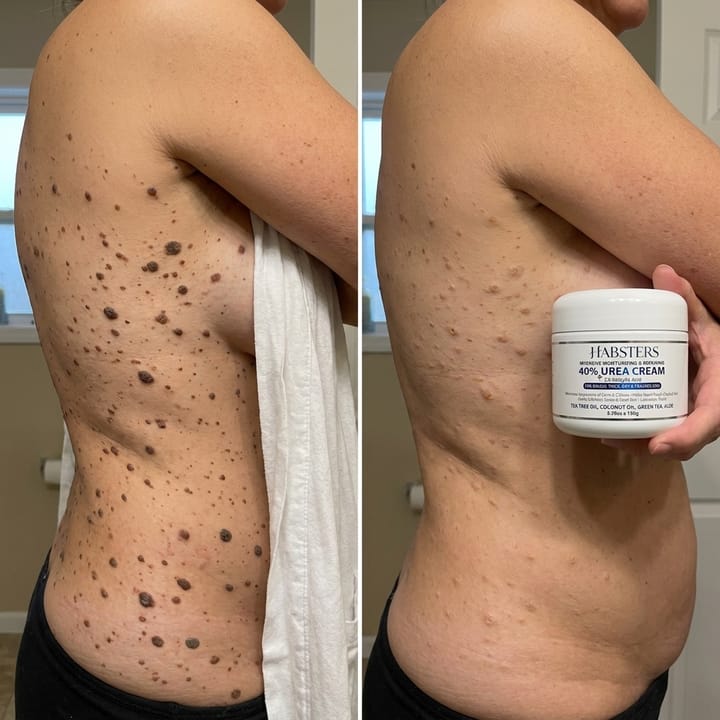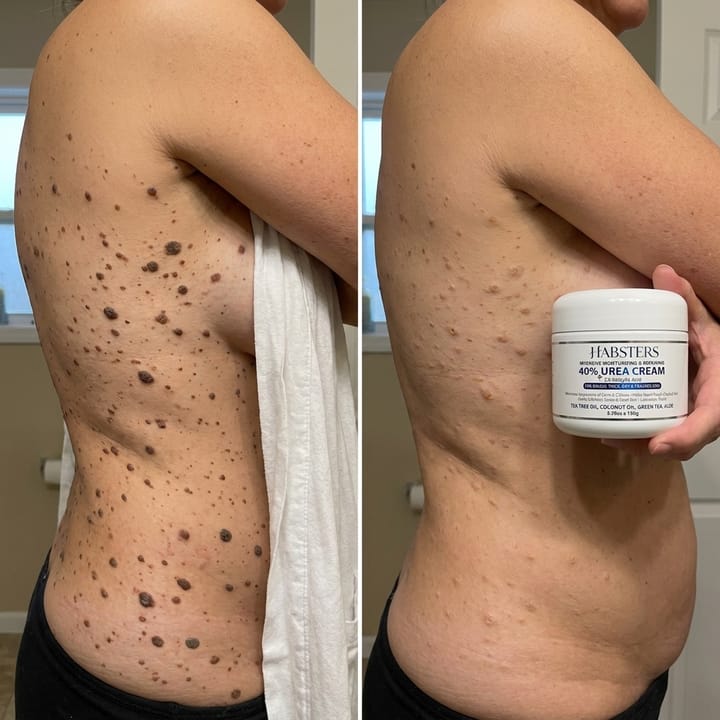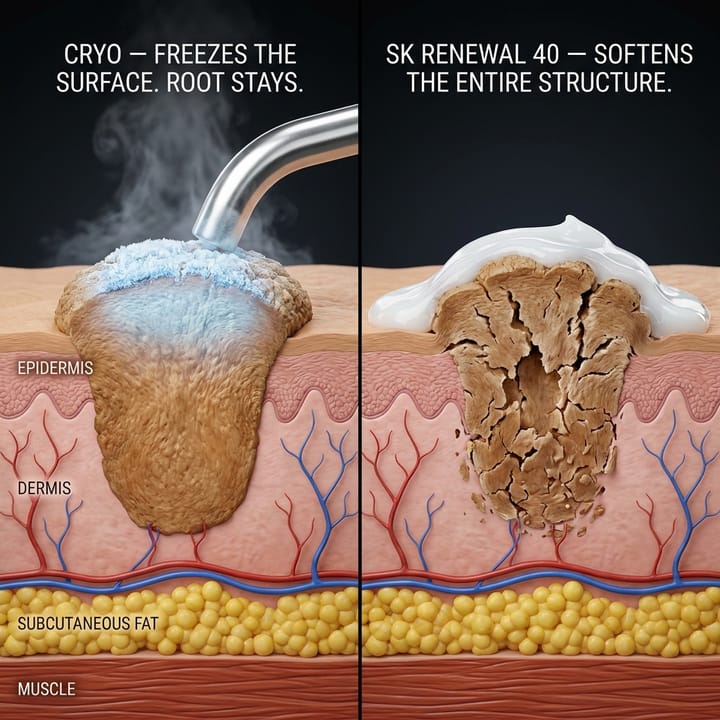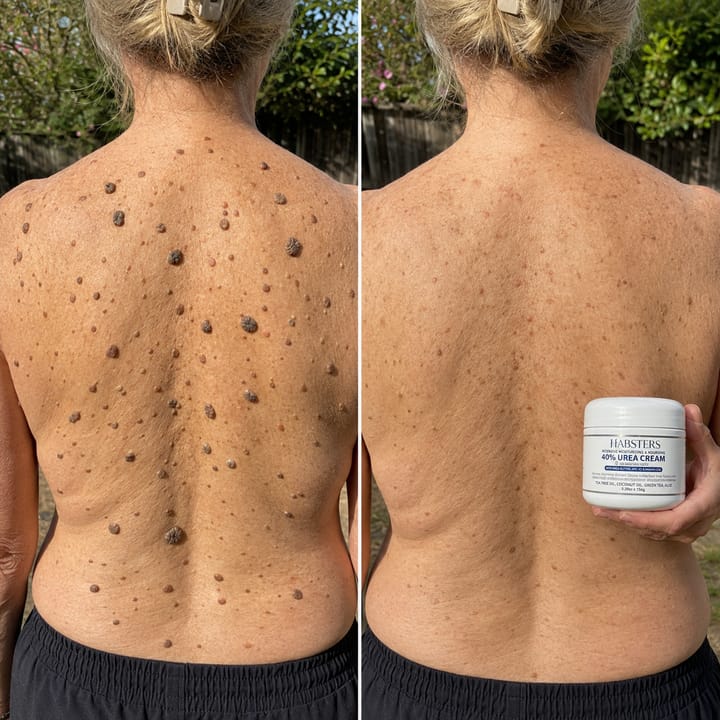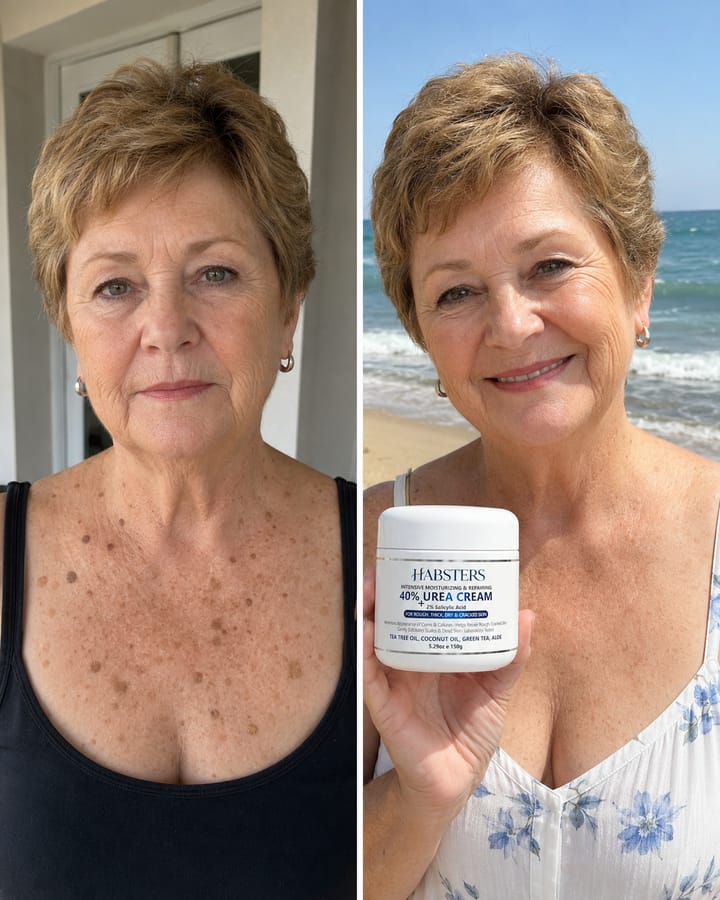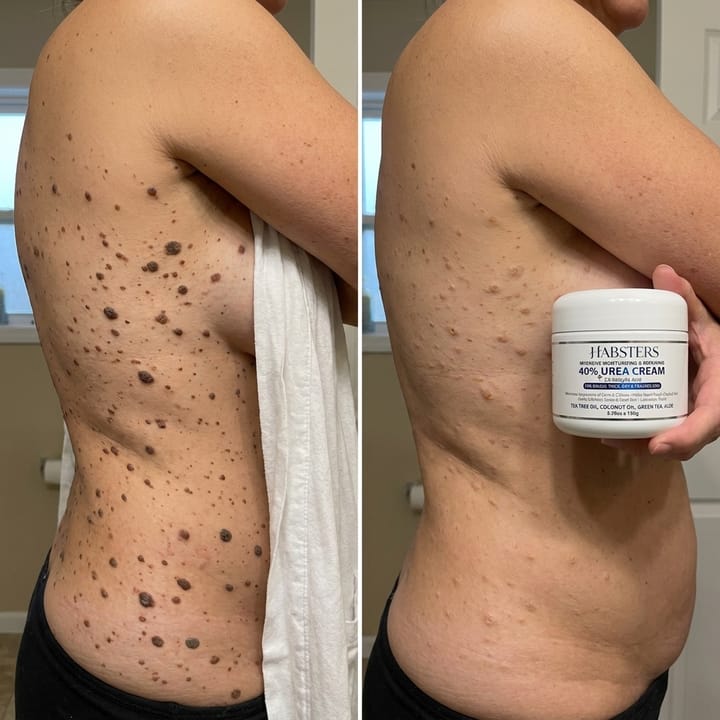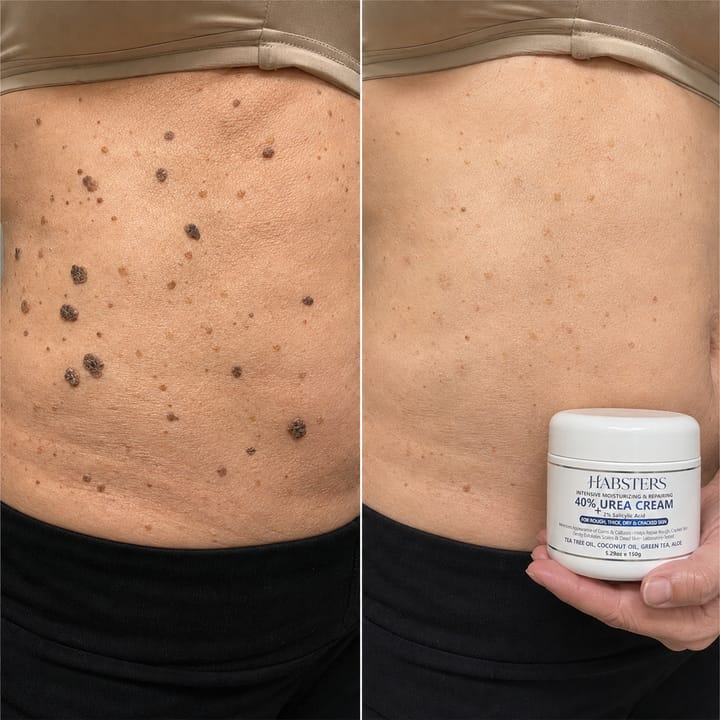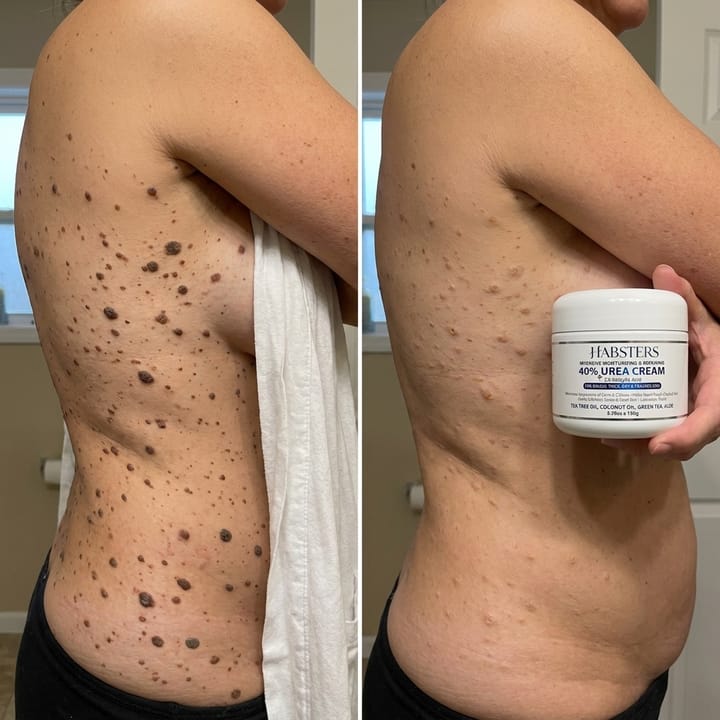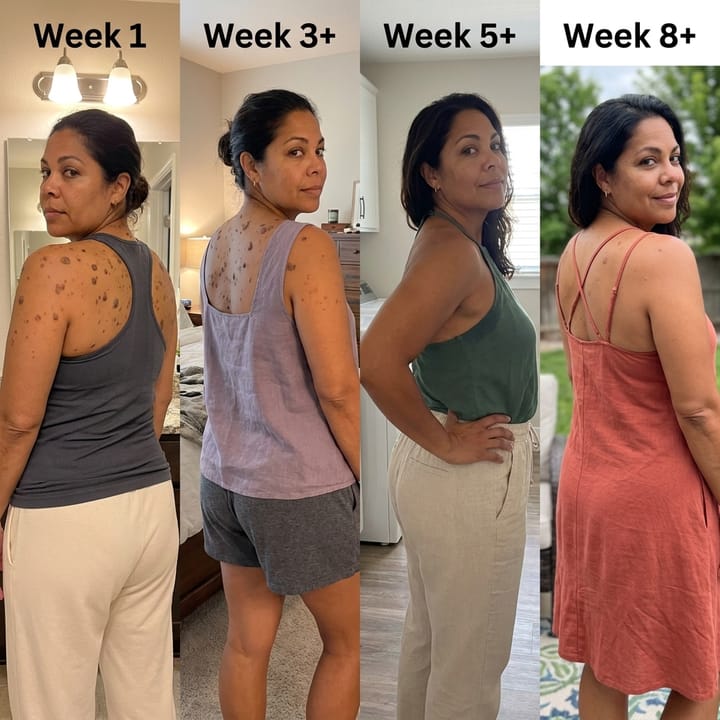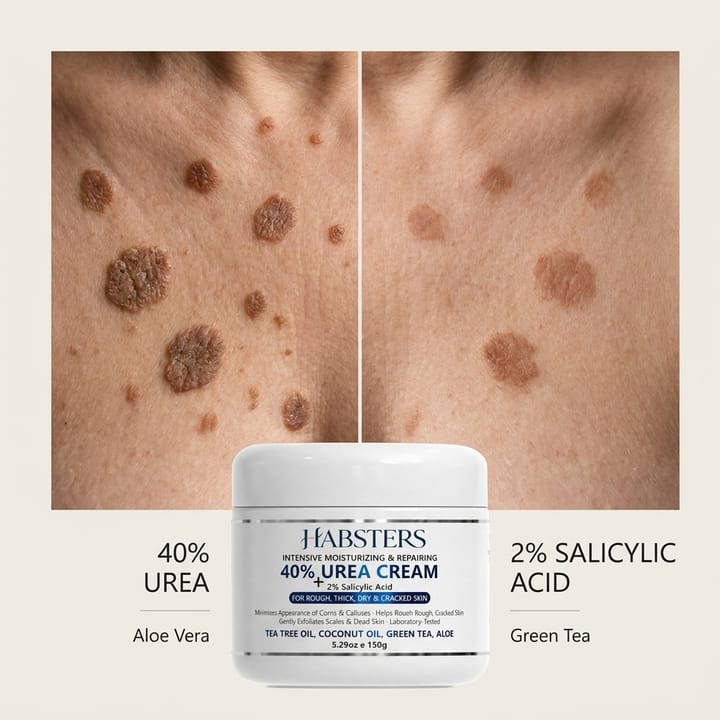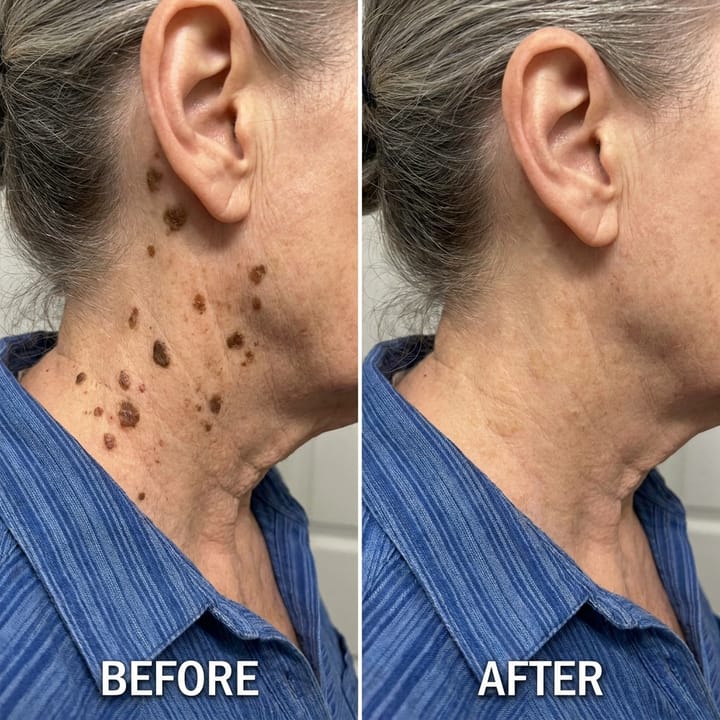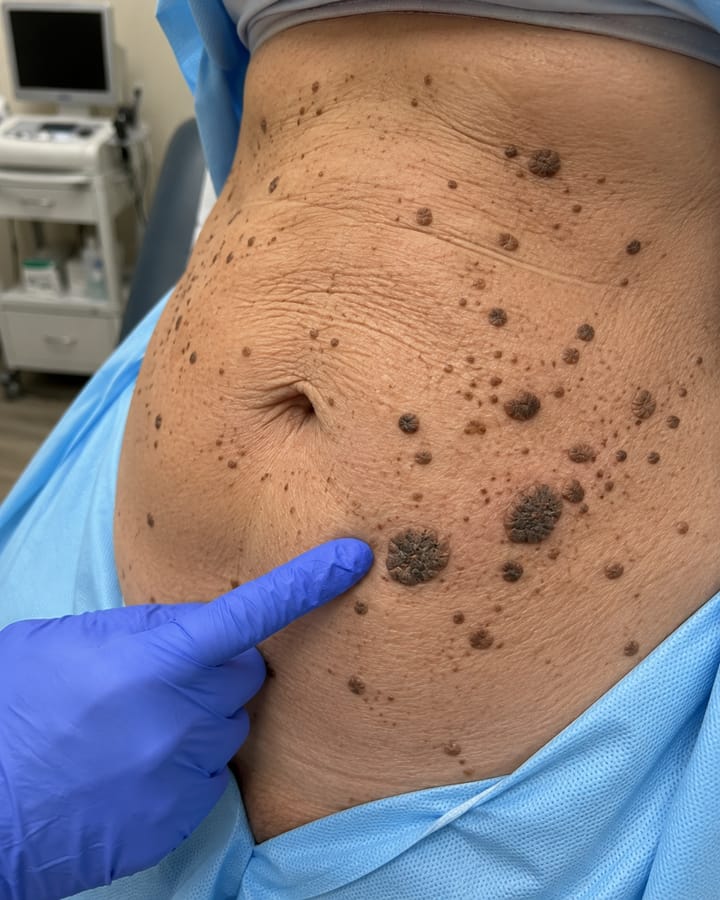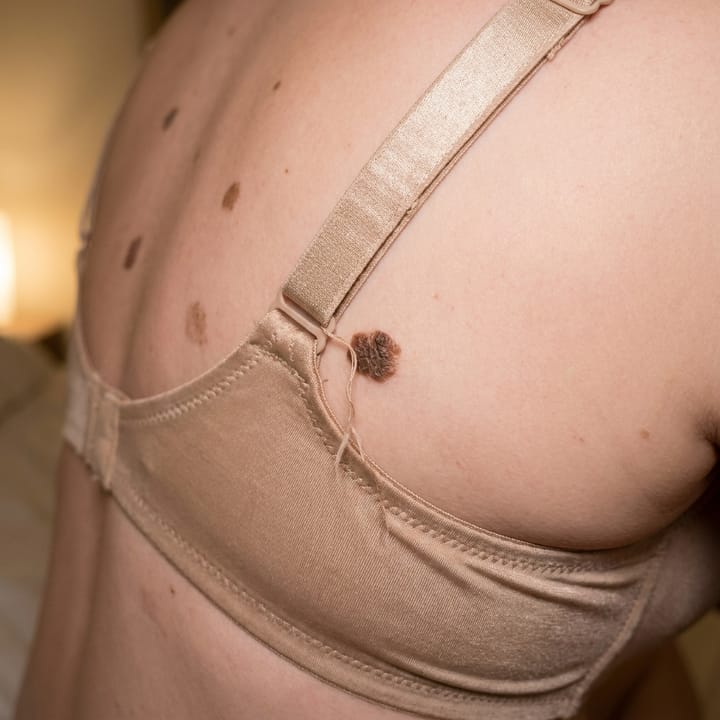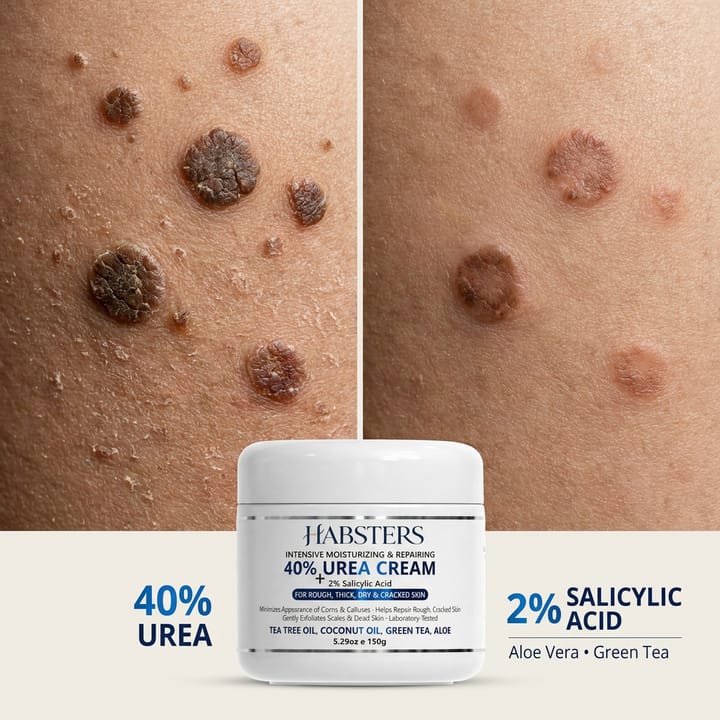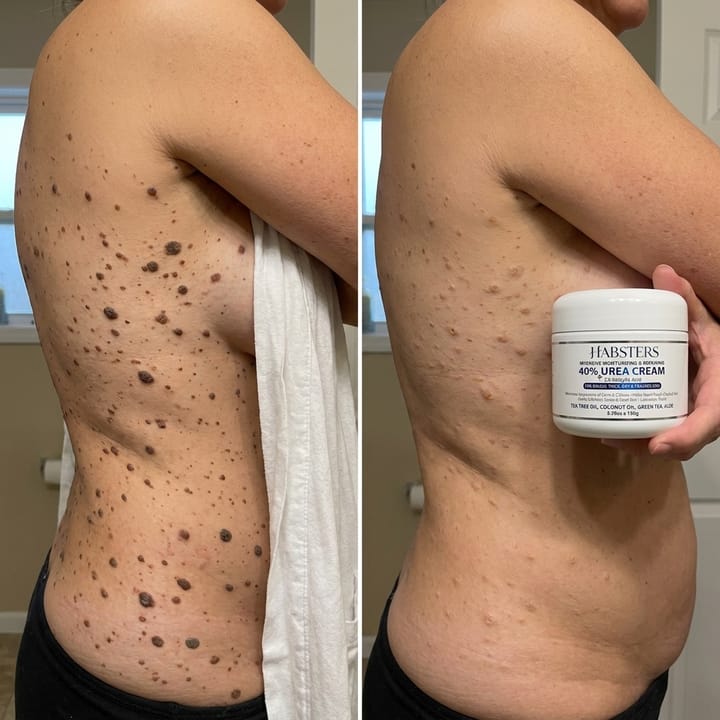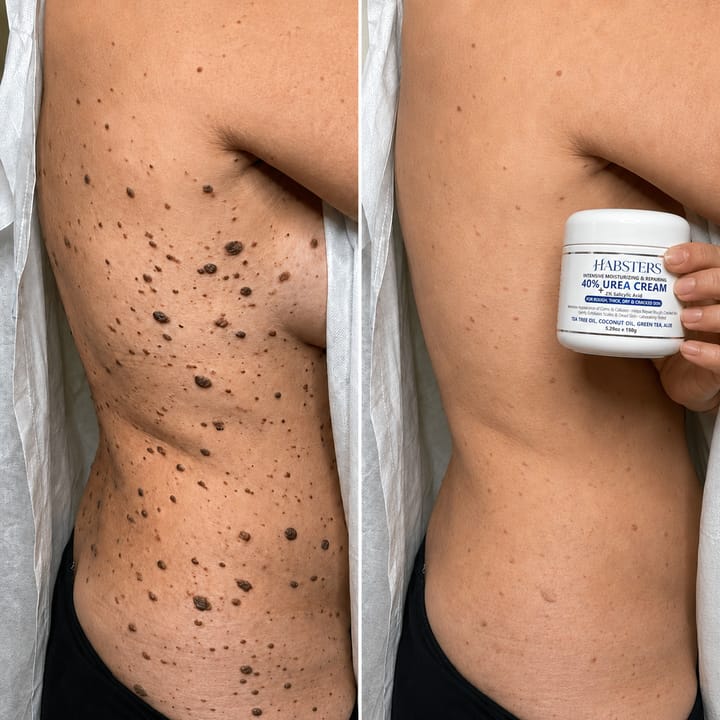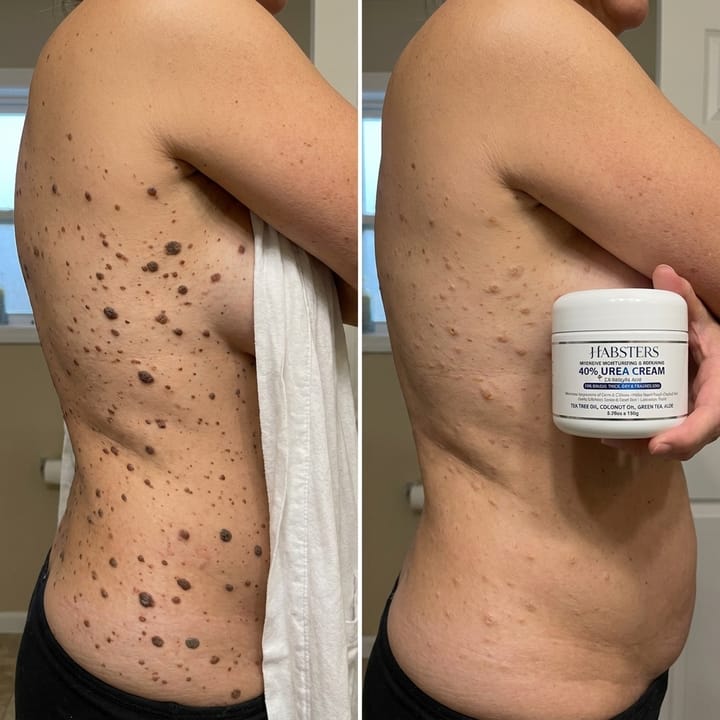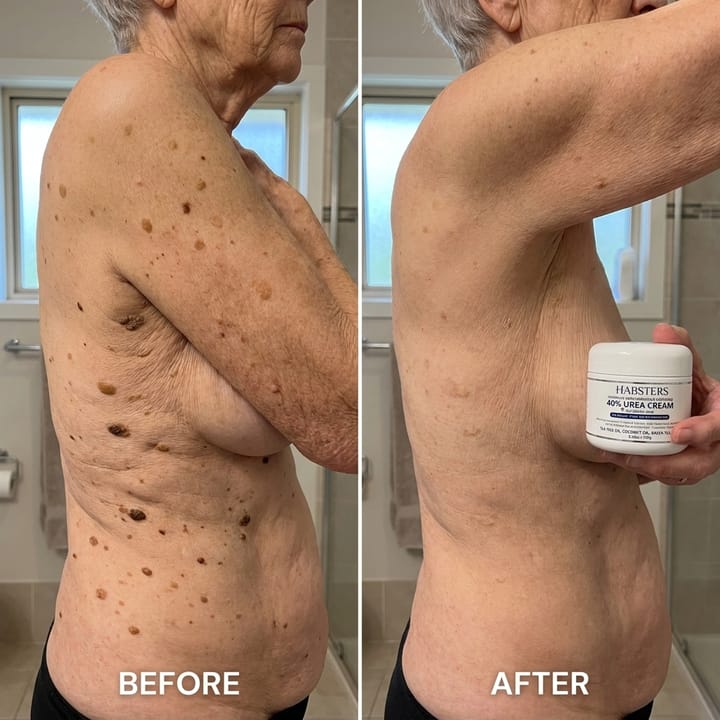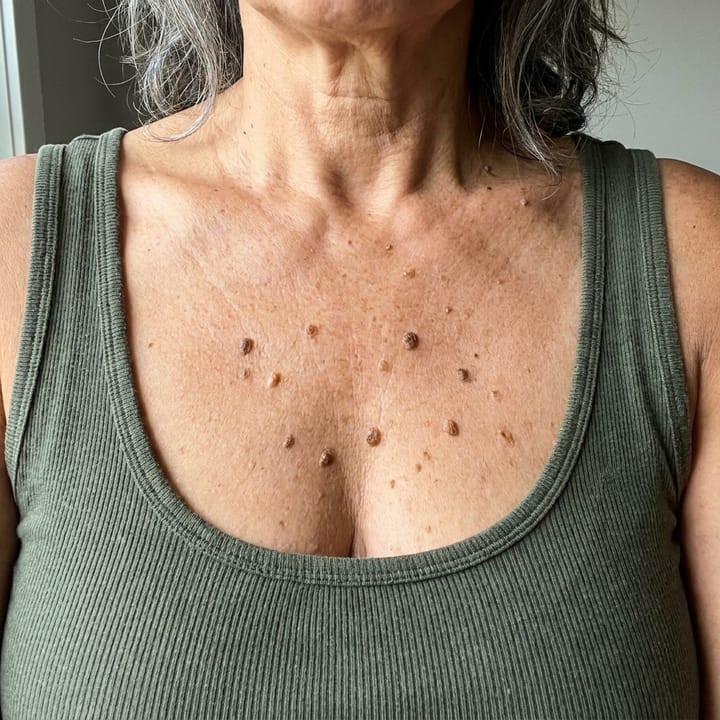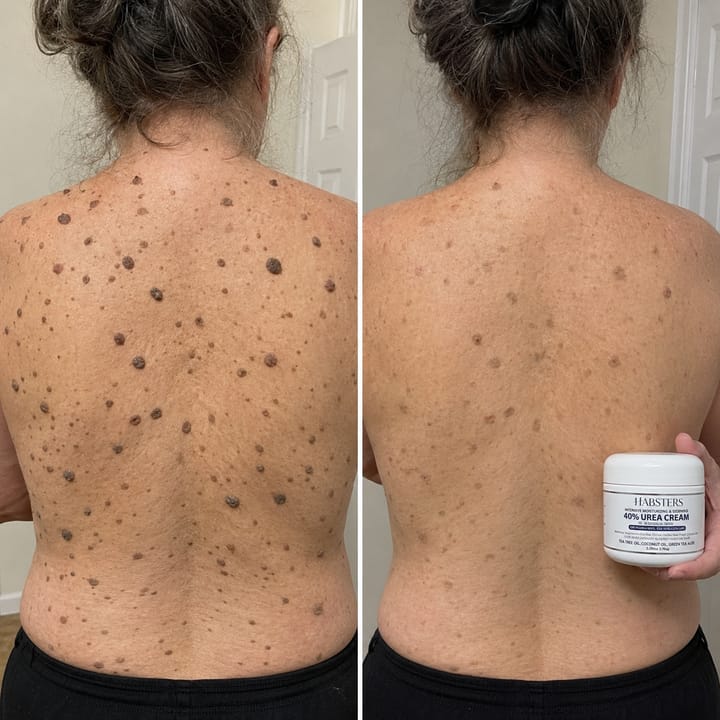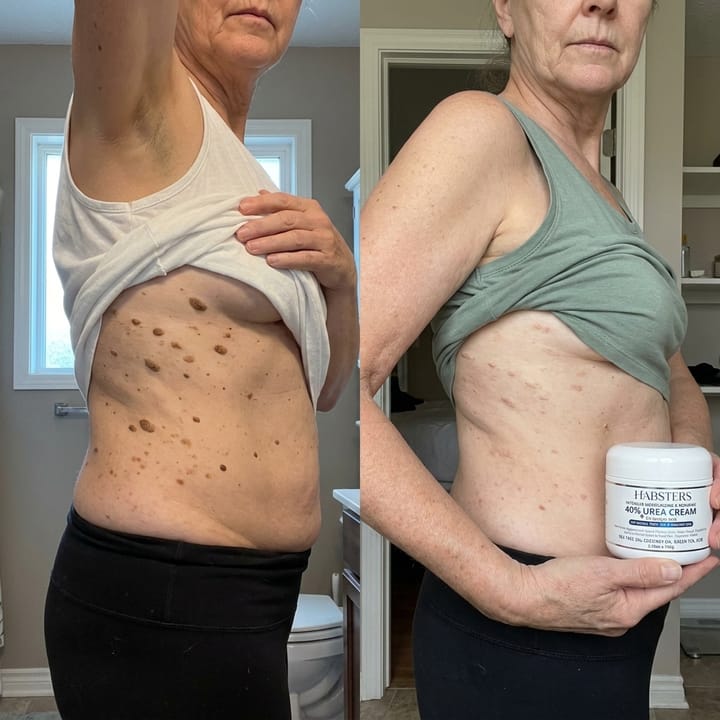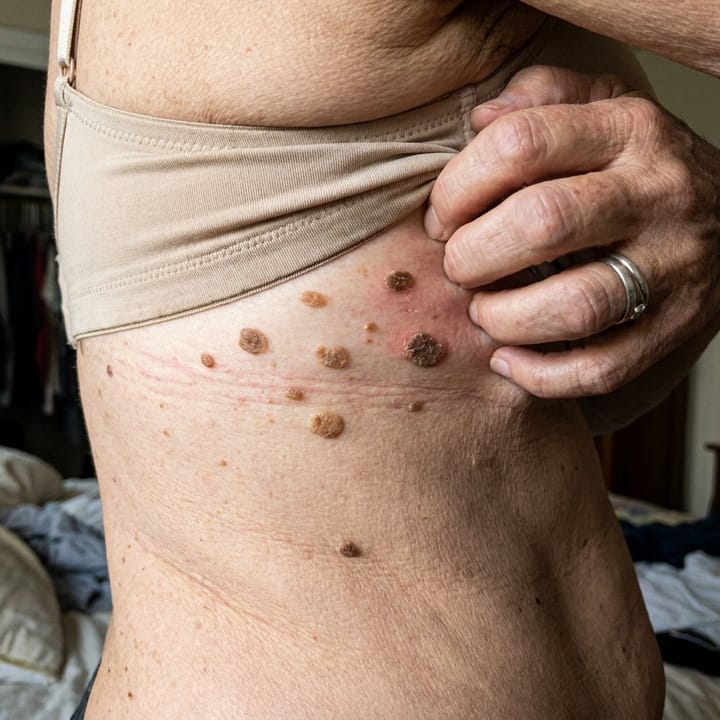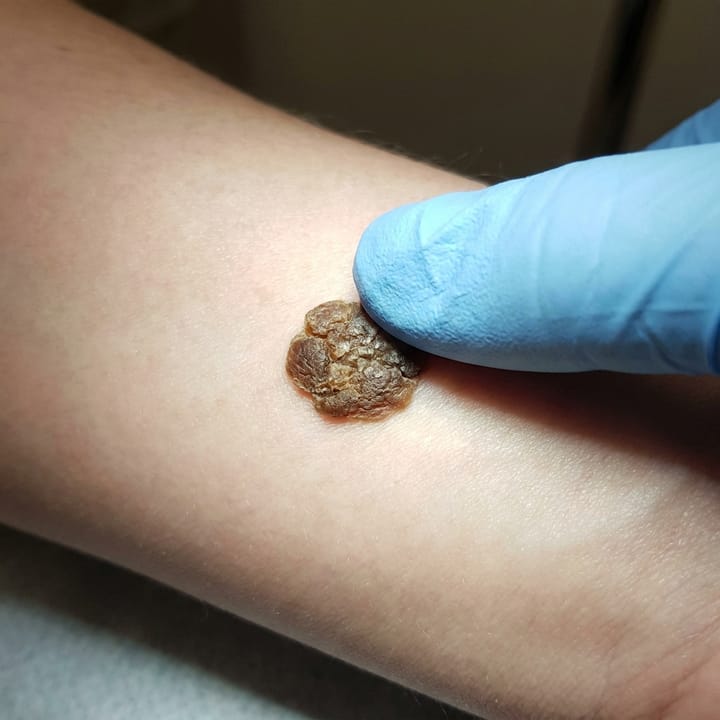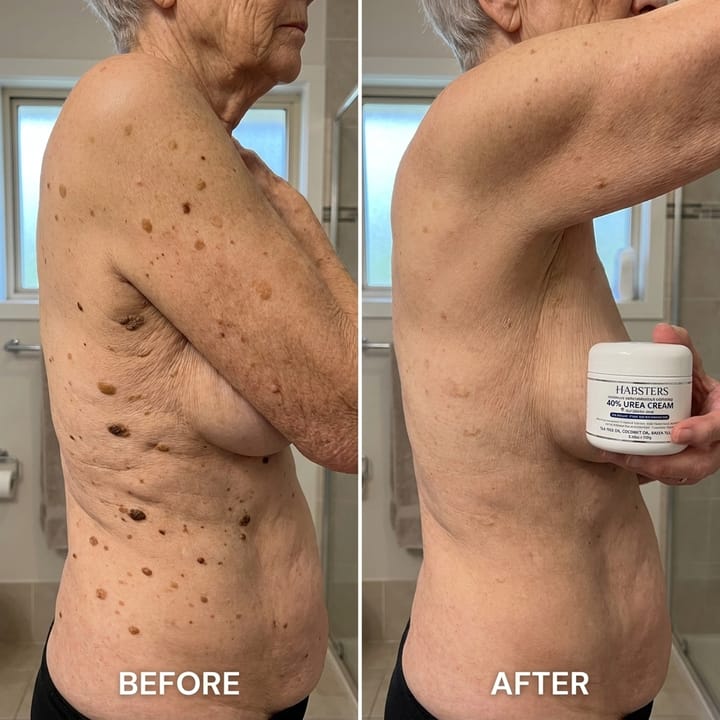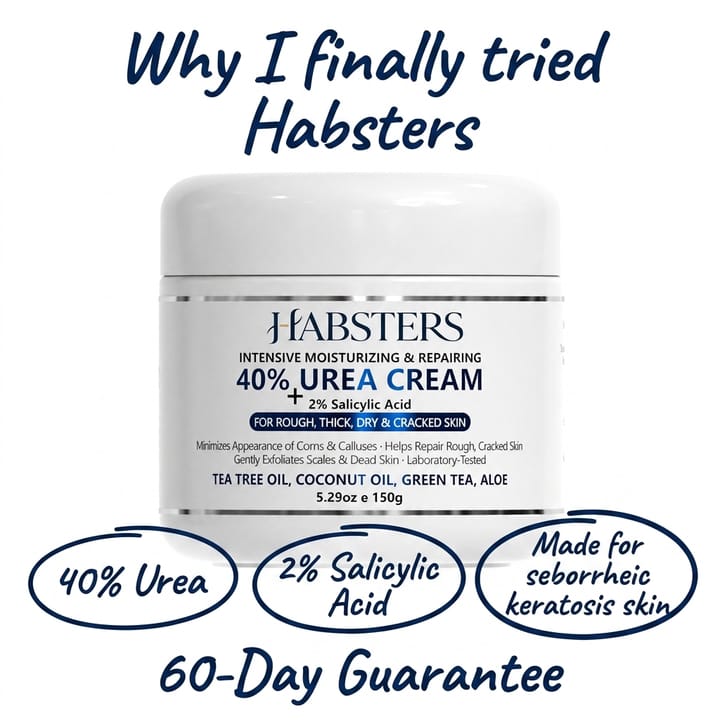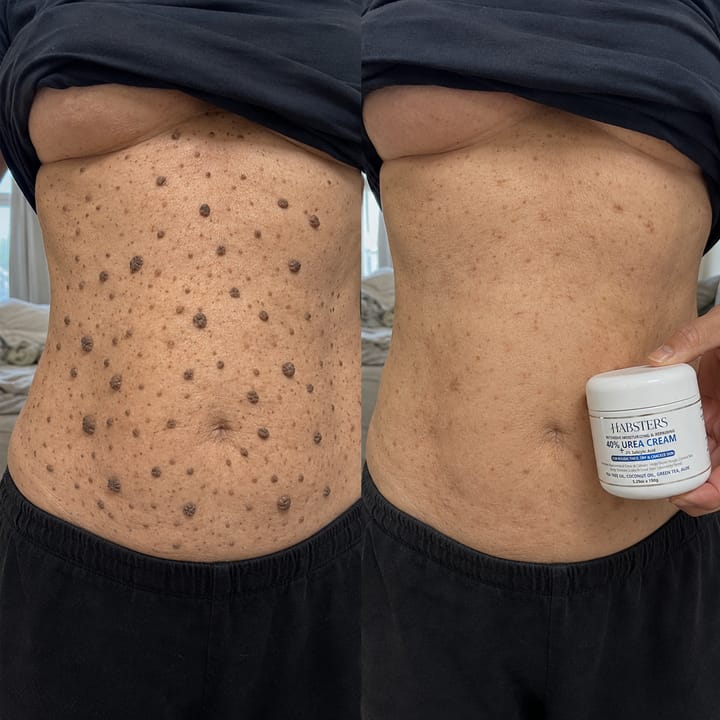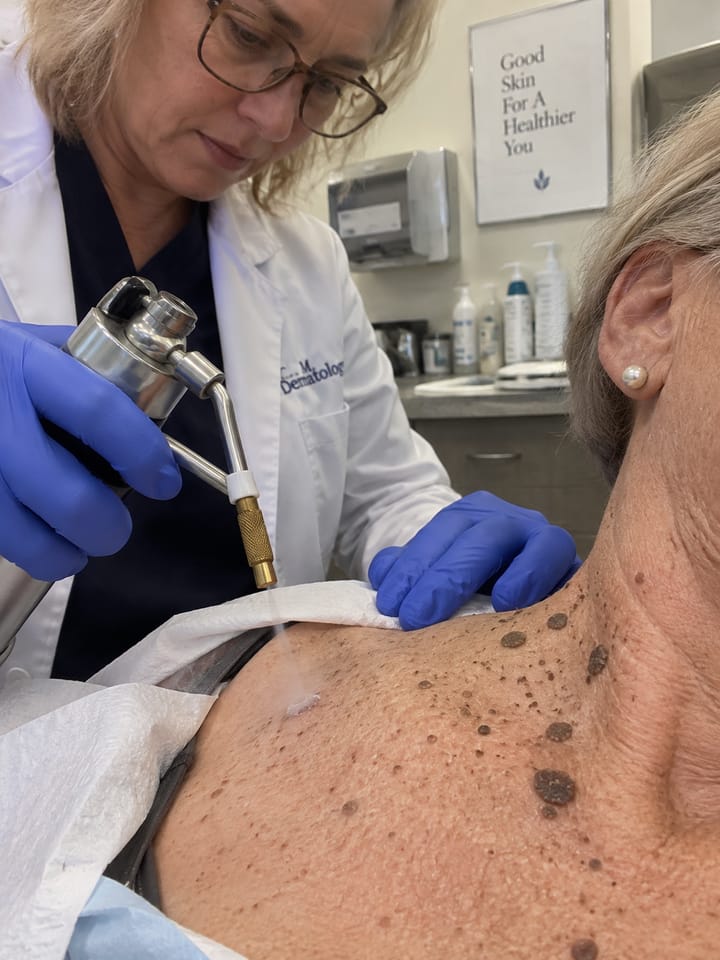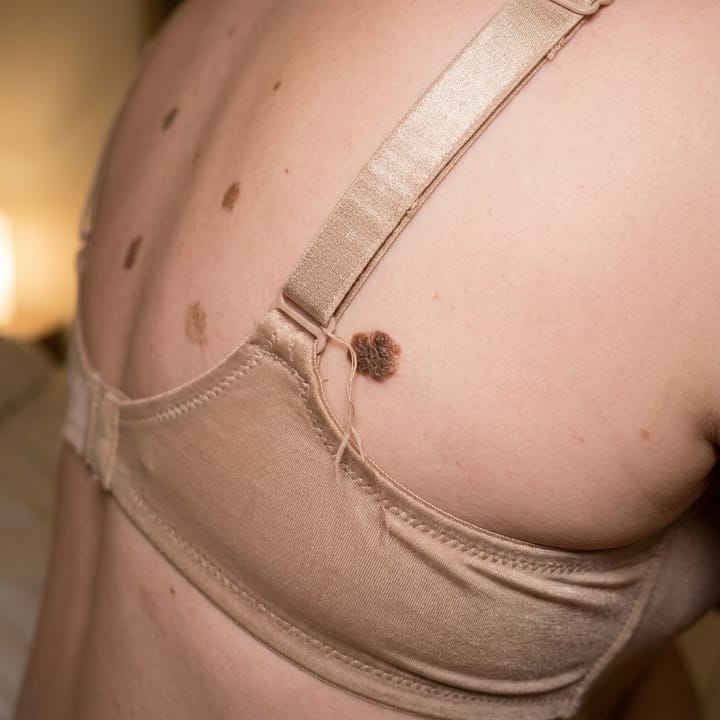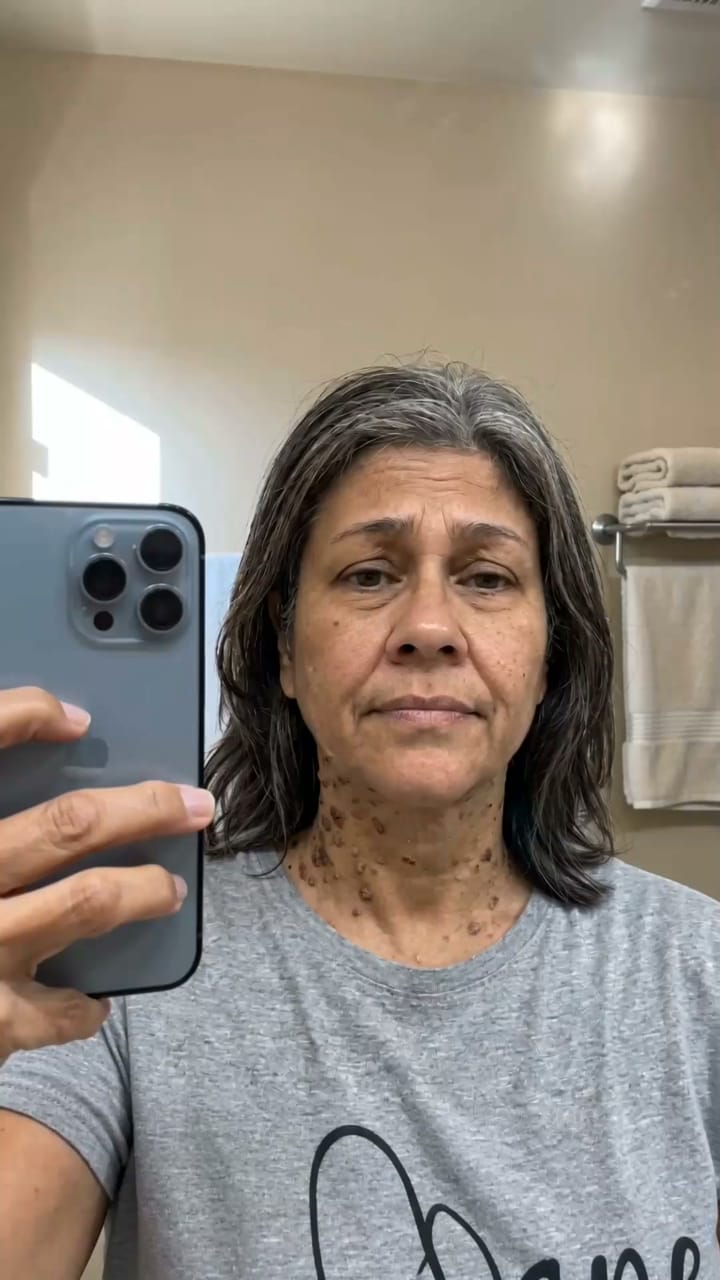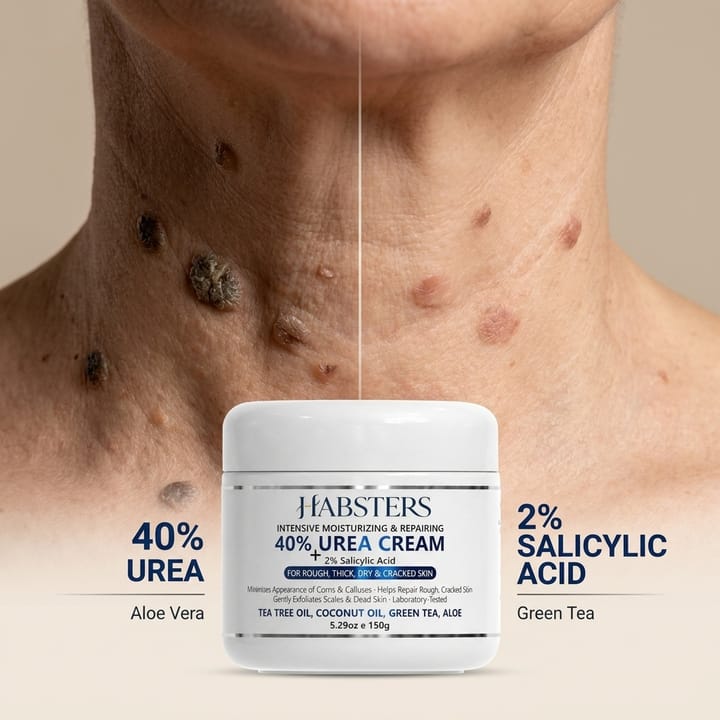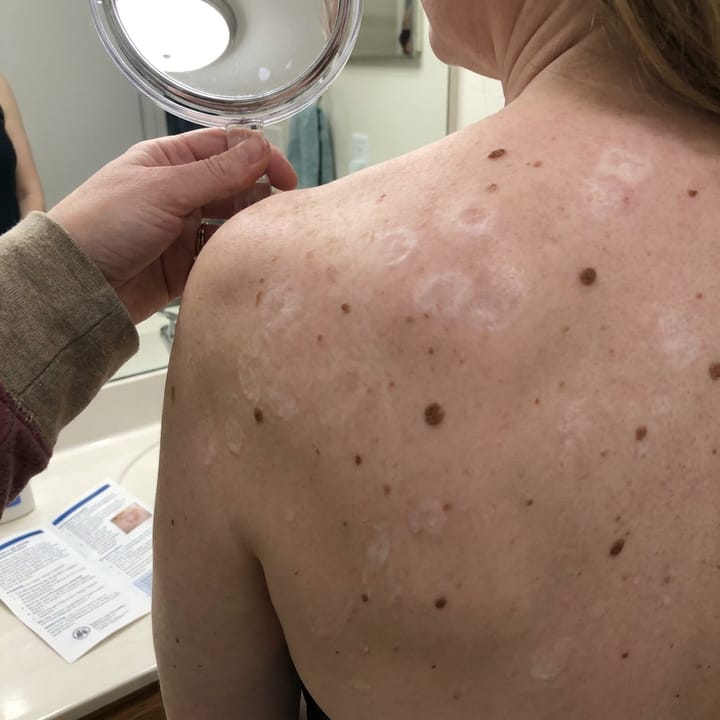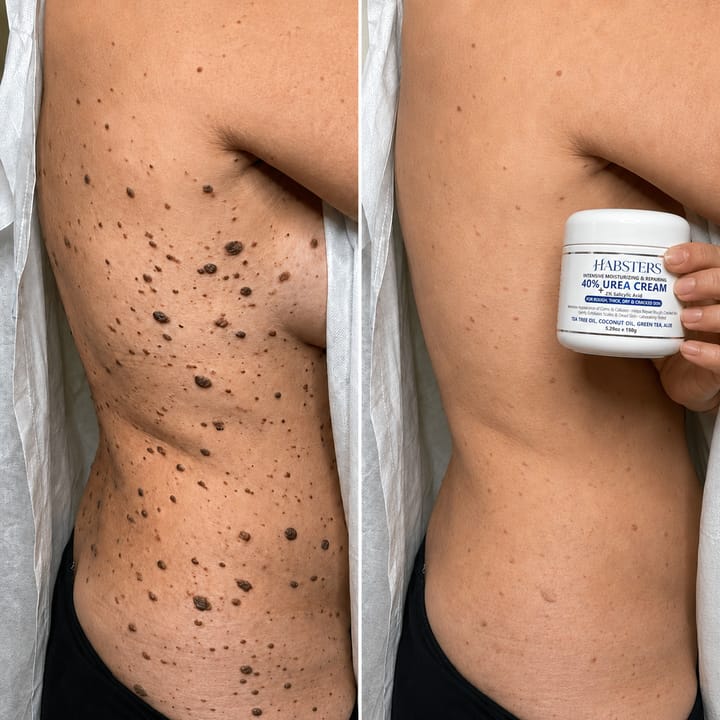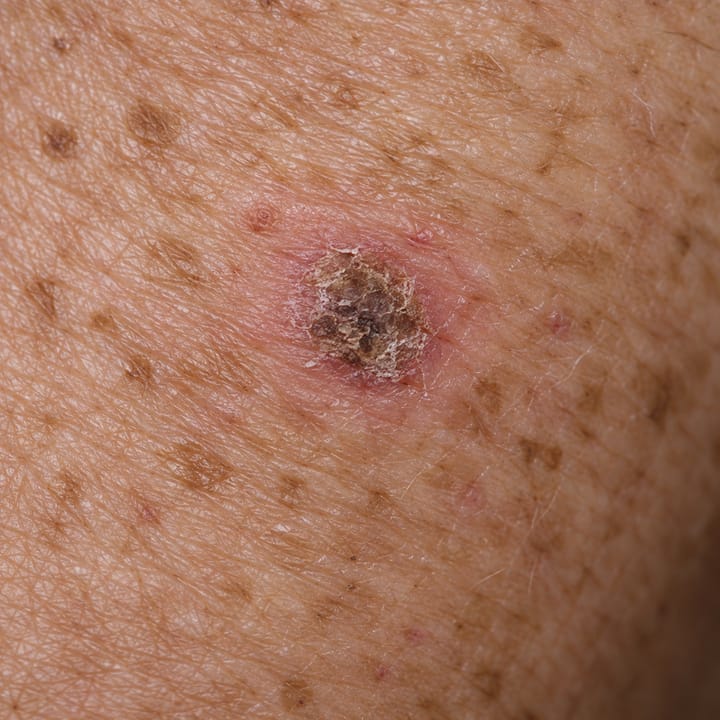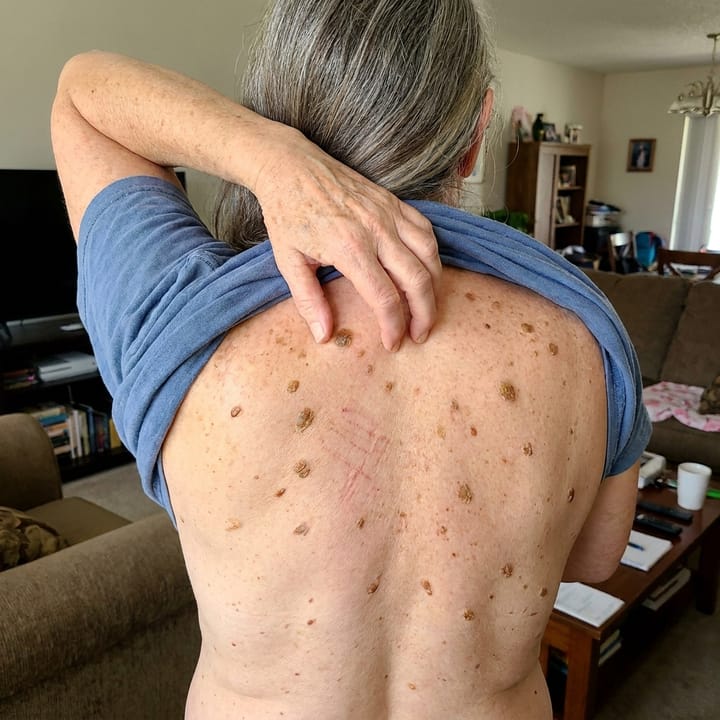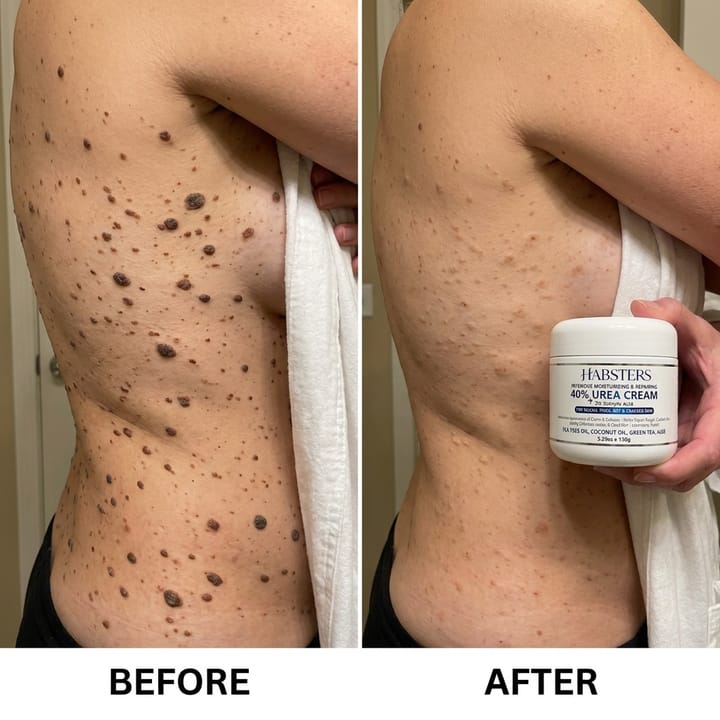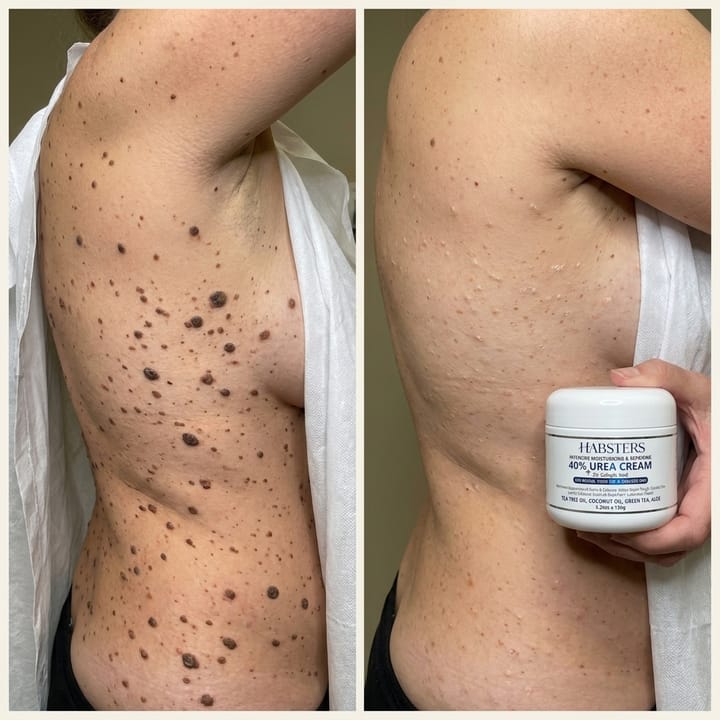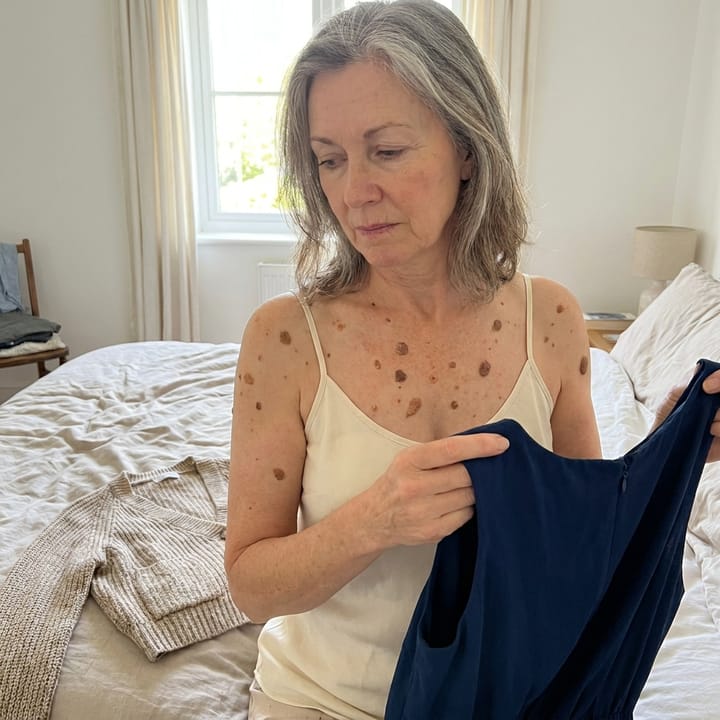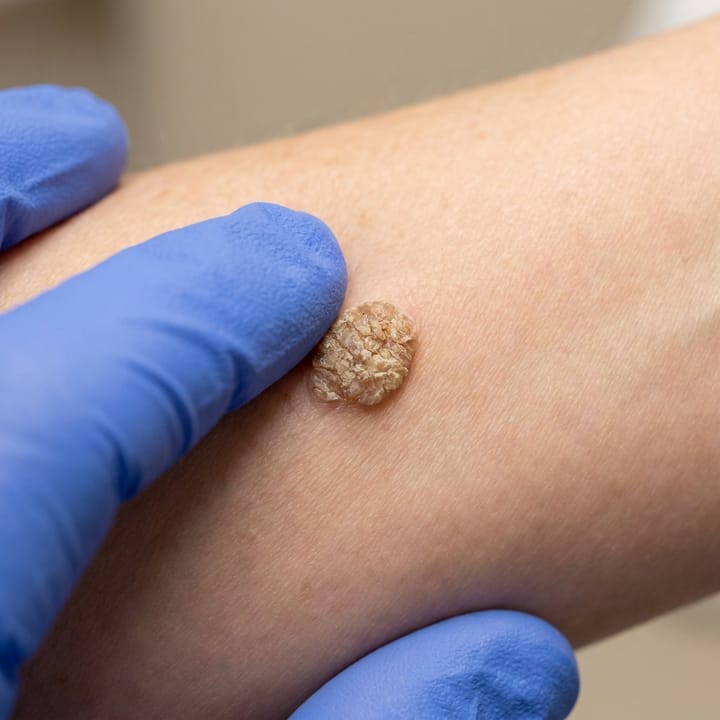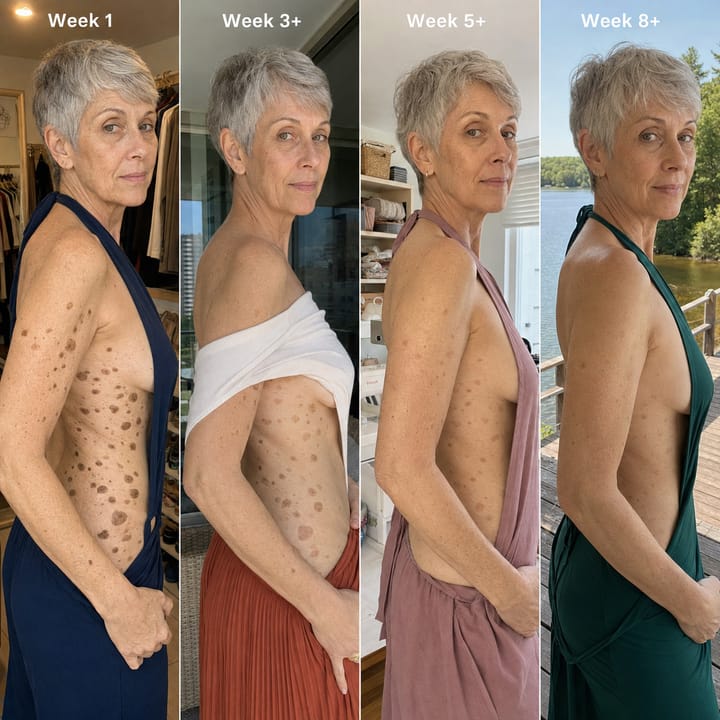

To anyone with seborrheic keratoses who has looked at a professional photo of themselves, a headshot, a conference page, a company website, and noticed the ones across their neck and chest are visible to every colleague and client who sees it, who has spent hundreds trying to stay ahead of them and is still falling behind, this is why spot removal will never keep pace with what your skin keeps producing. I noticed the acceleration about a month after I started my new role. I'd had seborrheic keratoses for years before that. Flat scaly ones. Harder crusty ones. Clusters across my back and trunk I'd been managing with dermatologist sessions and covering with higher necklines. But within six months of starting the new job, professional attire five days a week, there were significantly more on my neck and upper chest than I'd had in the previous three years combined. The collared shirts. The lanyards at conferences. The professional clothing rubbing the same areas every single day. I'd read that friction can aggravate seborrheic keratoses, that repeated irritation can trigger keratin overproduction in specific zones. My new job had been proving it every day for six months. I have a lot of these. Like, a lot. And the professional context made covering them harder than anywhere else. Every morning before work I'd stand in front of the mirror and calculate. Not what to wear, what was visible in what I was wearing. Which blouses covered the ones on my collarbone. Which necklines showed what the dermatologist had just frozen off. Whether the lanyard would cover what the collar didn't. The sessions I'd been booking, $250 a group, left white marks on my neck and chest. In a work context, white marks in a visible location were a different problem from the barnacles themselves. I'd traded one thing colleagues might notice for another. Then I saw my work headshot. The photographer had sent through the options. I opened them on my phone. The ones across my neck and collarbone were clearly visible in every shot. Not dramatically. But clearly. The kind of thing a colleague or client would notice on the company website. The kind of thing that would be the first professional image anyone saw when they searched my name. I knew something had to change when I counted eleven new ones on my neck and upper chest since my last session. Eleven. In six weeks. In the exact zones that professional clothing rubbed every single day. I'd already tried cryotherapy more times than I wanted to admit. $250 a session. Each time thorough, got a good number in one go. Within a month they were back. White marks where the barnacles had been in locations visible above a work blouse. I tried a glycolic exfoliating stick someone in a forum recommended for SKs. Used it every night across my neck and chest for weeks. My skin felt smoother generally but the actual raised spots, the thick crusty ones visible in professional clothing, didn't change at all. The product was working on normal skin around the spots while the spots themselves sat there untouched. I priced up IPL. Several sessions a year at hundreds of dollars each. I couldn't sustain that. Not for something that kept being retriggered every day I got dressed for work. I went back to my dermatologist. "We could do another round of cryo," she said. "Or look at IPL for the larger areas on your neck and chest." "The cryo left white marks," I said. "On my neck. In a professional environment that's its own problem. And they came back within the month. I've been in this job for six months and the ones on my neck and chest have multiplied faster than the previous three years. The friction from the collared shirts and lanyards is retriggering them every single day. I can't stop wearing professional clothing." She nodded. "That kind of friction can definitely aggravate them. They do tend to recur. It's just the nature of them." Just the nature of them. I couldn't remove the trigger. I couldn't stop the sessions from leaving white marks in visible locations. The glycolic stick couldn't reach the actual spots. And I was falling behind faster than any approach could keep pace with. I was stuck. That was about three weeks before I ran into Sarah at a work conference. Sarah and I had talked about our SKs before, briefly, the way you mention something you've quietly accepted as permanent. She'd had them for years. Same professional context as mine, visible locations, covering up in work environments, the same dermatologist cycle. But something was different about her at the conference. She was wearing a blouse with a lower neckline than I'd ever seen her wear at a work event. The ones across her chest and collarbone, the ones I'd noticed at previous conferences, looked completely different. I waited until the break. "Your skin," I said. "The barnacles on your chest. They look completely different." She looked almost surprised I'd noticed. "I know," she said. "I keep forgetting I can just, wear things now. Even to work." "What did you do? Because the friction from my new role is retriggering mine every single day. Collared shirts. Lanyards. The ones on my neck have multiplied faster in six months than in the three years before. I've tried cryo, white marks in visible locations. I tried a glycolic stick for weeks and it didn't change the actual spots. I can't sustain IPL. And the trigger isn't going anywhere." "I tried the glycolic stick too," she said. "Same thing. Smoother skin around the spots but the spots themselves didn't budge. A friend explained why. She said the reason glycolic sticks and most exfoliants don't do anything to these is because they're formulated for normal skin cell turnover at concentrations too low to reach what these spots are actually made of. They're compacted keratin. Dense hardened protein. A surface exfoliant can't penetrate that structure. It just polishes above it." "That's exactly what happened. My skin felt smoother but the spots were identical." "Her friend told her about something formulated at a concentration strong enough to actually get into the dense keratin and soften it from within. Not surface exfoliation. Structural softening. Works across all of them at once instead of targeting one at a time." "And it kept pace even with a daily friction trigger?" "I was so skeptical I didn't mention it to anyone. Then a colleague asked what I'd done to my skin. Said the ones on my neck and chest looked flatter. She'd noticed them at the last conference." She pulled out her phone and showed me photos. Four months apart. The difference was real. "Can you send me what it's called?" That night I couldn't stop thinking about what Sarah had explained. Seborrheic keratoses are physical growths, abnormal keratin buildup compacting and hardening faster than the skin can shed it. Flat scaly ones. Harder crusty ones. Friction accelerates exactly this process, repeated mechanical stimulation triggers keratin overproduction in the specific zone. That's why my neck and chest had multiplied faster since the new role began. The professional clothing was retriggering the exact zones where the spots were most professionally damaging. That's why cryotherapy worked temporarily, it destroys the growth but not the keratin overproduction. Which is why they came back. And why they came back fastest in the zones professional clothing kept retriggering between every session. That's why the white marks were a second problem, cryotherapy damages surrounding skin in the process of destroying the growth. In visible professional locations that trade was worse than the spots themselves. That's why the glycolic stick didn't work, at low concentrations it's formulated for normal skin cell turnover, not for the compacted keratin structure forming each growth. It exfoliated normal skin at the surface while the dense keratin underneath stayed completely intact. That's why IPL helped more than anything else but at several sessions a year couldn't keep pace with a trigger active every day she got dressed for work. The trigger wasn't going anywhere. The only way to keep pace with it was something that worked consistently at home, softening the compacted keratin across all of them simultaneously rather than removing individual ones between appointments while friction kept producing new ones in every gap. When I looked into SK Renewal 40, what Sarah had explained made complete sense. Everything I'd tried had either destroyed individual growths one at a time, or worked on normal skin at concentrations too low to reach the dense keratin forming each spot. This works differently. Urea at high concentration crosses a threshold where it stops being a moisturizer and becomes a keratolytic. It disrupts the hydrogen bonds holding compacted keratin together, softening the dense protein structure from within instead of working on the surface above it. Salicylic acid loosens the cohesion between those keratinized cells once softened so they can actually shed instead of sitting compressed. One softening the dense structure from within. One releasing what's been softened so it can clear. Green tea and aloe calm the skin after keratolytic action. Tea tree oil supports a more even tone where spots were darkened. Coconut oil protects the surrounding skin barrier. Unlike cryotherapy, which left white marks in visible professional locations and didn't stop new ones forming in the friction zones, this softens the buildup without damaging surrounding skin. Unlike the glycolic stick, which worked on normal skin at a concentration too low to reach compacted keratin, this was formulated at the concentration where keratin bonds actually begin to break. Unlike IPL, unsustainable at several sessions a year for something retriggered daily, this works consistently at home across all of them at once. That's not a cure. And it doesn't stop friction being a trigger. But for someone whose professional life was retriggering new ones every day in zones she couldn't cover in a work environment, a high-strength keratolytic that softens the compacted keratin across all friction zones simultaneously is something no session or surface exfoliant had offered. I ordered it that night. I started applying it every night across my neck, chest, collarbone, and upper back as far as I could reach. A small amount across each area. Leave it on. Day 5: the flatter ones along my collarbone felt different. Less raised. Less defined where they met the surrounding skin. Day 7: I took a photo and compared it to one from two weeks earlier. The zones that had been multiplying fastest were visibly less prominent. Day 10: I caught myself not doing the pre-work mirror calculation automatically. First time in months. Day 14: the harder crusty ones on my neck were still there but the edges had softened. New ones appearing in the friction zones but smaller and flatter than the ones I'd been booking sessions to remove. Week 3: I wore a blouse with a lower neckline to a client meeting. The ones across my collarbone that had always made me reach for more coverage in a professional context. Didn't think about it until I was already in the meeting room. Week 4: Sarah messaged to ask how it was going. "The flat ones are basically gone. The harder ones are softer and flatter. New ones still appearing in the friction zones but smaller than they used to get. And I wore a lower neckline to a client meeting without thinking about it." "That last part. That's the one. Keep going. It keeps working." New ones still arrive. Friction is still a trigger, that hasn't changed. But they don't get the chance to build into what they used to become. I manage all of them consistently at home rather than waiting for enough to justify another session that leaves white marks in visible locations. I'm not cured. I never expected to be. But for the first time I feel like I'm actually keeping pace with something that my working life keeps retriggering every single day. If this is your life right now, watching seborrheic keratoses multiply fastest in the zones professional clothing rubs every day, covering up in work environments where covering up isn't always possible, spending hundreds on sessions that leave white marks in visible locations while the friction trigger keeps retriggering new ones between every appointment, you need to understand something. This isn't just about the barnacles. It's about a trigger you can't remove from your life outpacing every removal approach you've tried. Seborrheic keratoses are compacted keratin growths. Cryotherapy removes them temporarily and leaves white marks in professional locations. Glycolic sticks work on normal skin at concentrations too low to reach the dense keratin forming each spot. IPL requires sessions you can't sustain at the rate friction keeps triggering them. None of them soften the compacted keratin consistently, at home, across all friction zones at once. If nothing changes you're another session that leaves white marks where colleagues can see. Another conference calculating what the lanyard covers. Another professional photo where the ones across your neck and chest are visible to everyone who looks. SK Renewal 40 comes with a 60 day money back guarantee. Long enough to watch the ones in the friction zones soften, feel the harder ones shrink, and stop doing the pre-work mirror calculation automatically. Notice when you stop calculating necklines before work events. Notice when a colleague notices something has changed without you mentioning it. Notice when new ones appear smaller in the zones that used to multiply fastest. You don't have to keep covering up in environments where covering up has limits. The morning you stood in front of the mirror before work and calculated what was visible in every neckline, while knowing the collared shirt you were about to put on was retriggering the same zones you'd just paid hundreds to clear? This is how you finish that. Learn more about SK Renewal 40 👇
Read more