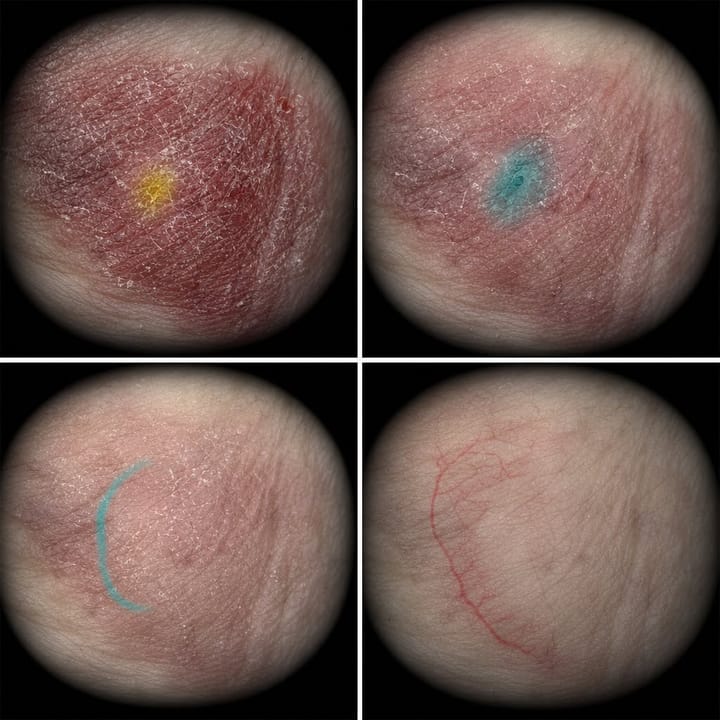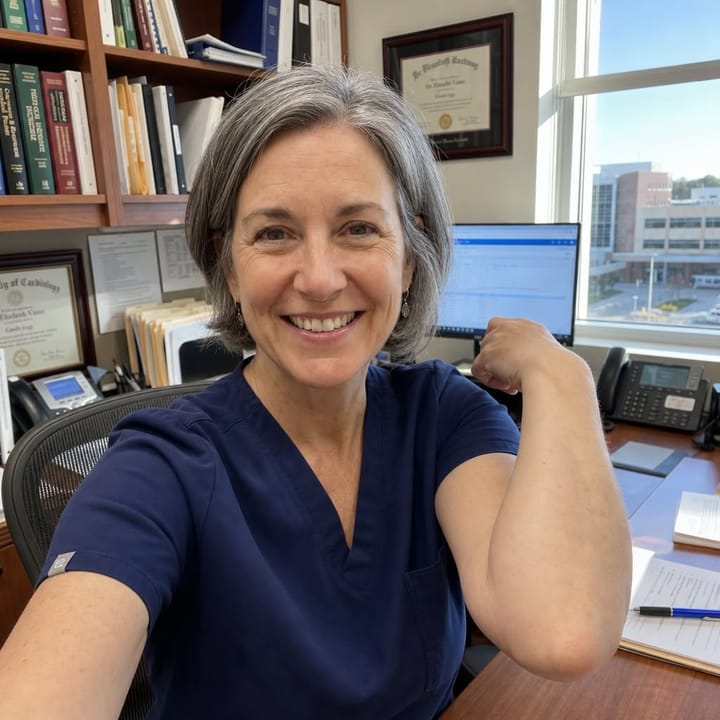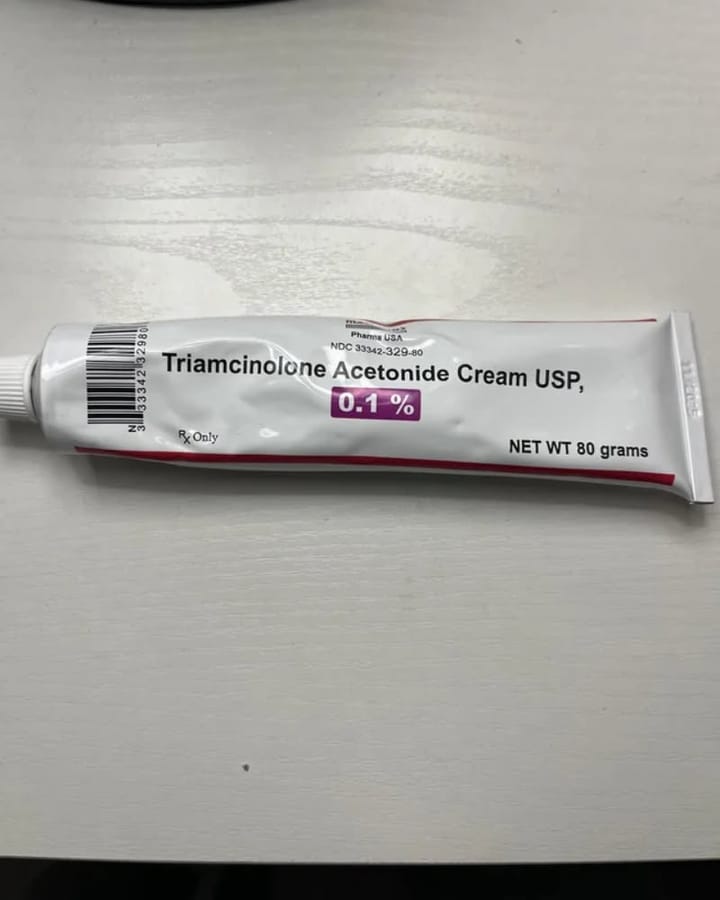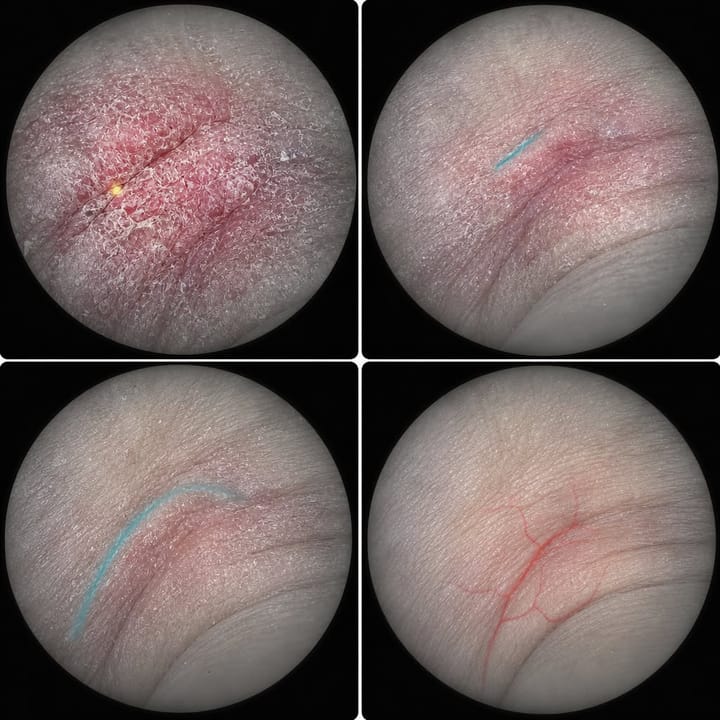

I don't give a f*ck if this upsets you. I am going to say something that nobody with chronic eczema wants to hear. I diagnosed my 1,412th case of atopic dermatitis on October 3rd, 2024. Sixteen days later, at 2:47 AM on October 19th, I was scratching my own forearms until they bled onto my sheets. I was 58 years old. I am a board-certified dermatologist. Twenty-two years of practice. Two prescriptions for the strongest topical steroid I had, written for me by a colleague I had trained three years earlier. I clawed through my own skin for eleven weeks straight. The specialist consults cost me $7,100. The failed elimination-diet program was another $920. They will let me see patients again. My hospital privileges are intact. But I will never write a steroid script again without remembering that I was in that same chair, with someone I had trained handing me a tube of clobetasol, because everything I was taught to prescribe had not saved me. I am writing this because I know exactly what my colleagues will say when they see it. I do not care. If you are over 50 and you have chronic eczema, or someone you love does, please read the entire thing. I know it is long. I know you are scrolling. I know you have things to do. Fifteen months ago I would have given anything for someone with my credential to sit me down and tell me what I am about to tell you. Nobody did. I was diagnosed with atopic dermatitis six years ago at 52. Two patches on my inner elbows. Itch score I would have called a 7. The diagnosis surprised me and it did not. My mother had suffered lifelong eczema and died with skin like cracked leather at 64. She was managed on hydrocortisone and an antihistamine for eleven years. My sister's flares were borderline for a decade before they became constant. I had watched the pattern in my own family and I had built my entire practice on treating the skin of patients who looked like my mother. I did what any dermatologist would prescribe. I started hydrocortisone at diagnosis. My colleague, another dermatologist at my own hospital, moved me to betamethasone the following year when the patches spread to my wrists. She added a daily antihistamine the year after that when the night itch woke me at 3 AM. Three treatments. Two of them treatments I had personally prescribed to hundreds of my own patients. I moisturized twice a day. I stopped hot showers. I switched to fragrance-free everything. I ran the elimination diet I recommend to every patient after a bad flare. No dairy. No gluten. No nightshades. Minimal processed food. I patch-tested myself the year I was diagnosed. Two mild positives. I checked every box on my own protocol. By last September, my patches had shrunk. My night itch had eased. My skin looked calm under the office lights. By the standard of the guidelines I had helped write for our dermatology group, I was managed. Managed. That word again. I photographed my own skin under a dermatoscope last September, six years after the first images. I did it because a hunch would not leave me alone. The barrier readings came back worse than my worst patient that month. For context, I have called patients into the office over readings half that bad and used the sentence, we need to talk today, not tomorrow. I asked my partner to run a full skin-barrier panel on me. She did. It was equivocal. She recommended a biopsy to be safe. I scheduled it. And then I did not go. I want to tell you why. Because sitting in my office at 6 PM staring at my own barrier readings on my own screen, I recognized something. I was doing exactly what my mother had done. She had been managed for eleven years before the flare that never healed. She had been on hydrocortisone and an antihistamine. Her patches had read fine. Her skin had been controlled. And she had died at 64 with skin cracked open to the bone in the same hospital where I did my dermatology fellowship. I did not go to my own biopsy because I already knew what it would show. I did not want to see it in writing. I told myself I had time. Twenty-four days later I woke my sister at 2 AM. The itch started in my forearms at 1:52 AM. I remember the time because I looked at my bedside clock and thought, this is not just dry skin. It was not. It was the fire I had described to a thousand patients in follow-up appointments. Deep. Under the skin. Radiating up into my neck and scalp. My sister, a nurse, sat up before I could finish the sentence. She is not a skin clinician but she has heard me describe this exact presentation at our dinner table for twenty years. She drove me. We went to a competing hospital, not my own. Because I did not want the residents I had trained to see me clawing at my own arms. They saw me anyway. The dermatologist on call was a woman I had trained through her residency in 2021. She walked into the room, saw me raking at my forearms, and her face did the thing. She said my name. I need clobetasol, I told her. Full-body flare. Ninety-five percent of my trunk or worse. Get me on the strongest thing you have. Yes, ma'am, she said. They walked me down the corridor I had walked down thousands of times going the other direction. I looked at the ceiling tiles and counted them because I did not want to look at the resident who was about to hand me the same tube I had handed out four hundred times. I broke skin on both arms forty seconds after they left the room. My resident later told me the flare had spread to lichenified plaques across my back before the steroid touched the worst of it. Two tubes of clobetasol. Both the same strength I had prescribed for other patients four hundred times. I was flaring hard for three weeks. Barely sleeping for four. I came home on October 26th with my sister, a bag of gauze, thin cracked skin on both arms, and a shopping bag of prescriptions I had personally recommended to hundreds of patients over twenty-two years. I did not want the full workup my colleagues were suggesting. I ran it on myself anyway. Because I knew that if I did not, in eighteen months I would be reading somebody else's chart from an outside institution and seeing my own pattern on it. The gastroenterology consult was with a colleague I had trained with in residency. She pulled my last four stool and gut-permeability readings up on her screen. They had been drifting quietly for three years. My intestinal permeability marker was elevated and had been normal four years earlier. She used the phrase, early leaky-gut pattern. Nobody had flagged it because my skin had read managed and a mildly high marker does not trigger a GI referral in the standard-of-care algorithm I had signed off on for our hospital. The allergist found a Th2 cytokine profile running high in both my panels. She used the phrase, systemic immune overdrive. I had been squinting past my own fatigue for eight months. I had blamed my age. The hepatologist ordered a liver ultrasound. Grade 2 hepatic steatosis. My ALT had been 47 for two years. My colleagues had said, keep an eye on it. Nobody kept an eye on it. The lab ran a stool culture. Measurable Candida and bacterial overgrowth, right side worse than left. I had been bloated and gassy for six months. I had blamed the elimination diet. Every one of my systems was showing the pattern I had watched in hundreds of my own patients whose eczema never truly cleared. Same disease. Same trapped inflammation. Overgrowth in my gut. Leaks in my gut wall. A cytokine storm in my blood. Fat in my liver. And finally, fire on my skin. I sat in my office on November 8th with all five reports in front of me and I understood something I had never let myself understand before. Every treatment in my medication cascade had been treating a downstream symptom. Hydrocortisone was suppressing my surface inflammation. Betamethasone was thinning my barrier while quieting the patches. The antihistamine was blunting the surface itch. Not one of them had touched what was doing this to five systems at once. I am a dermatologist. I am supposed to be the person who knows how to prevent this. I had prescribed the exact three-treatment protocol I was on to a thousand patients who looked like my mother. Every one of those prescriptions had passed peer review. Every one had followed the guidelines. Every one had been the correct standard of care. And it had failed me at 58. I sat at my desk that night at 11 PM after my sister had gone to bed and I did something I had not done since medical school. I opened PubMed and I searched for the actual mechanism. Not the management guidelines. Not the topical-steroid papers. The mechanism. I read for four hours. I found what my training had covered lightly and never in the depth it deserved. The gut-skin axis. Intestinal barrier failure. LPS leaking into the bloodstream. The Th2 cytokine cascade, IL-4, IL-13, IL-31 the itch molecule. The mechanistic explanation for why the three treatments I had been prescribing for twenty-two years suppressed downstream symptoms without addressing the upstream failure driving all of them. None of this was hidden. It sat in journals I had had access to for twenty-two years. The Journal of Investigative Dermatology. Gut. The New England Journal. I had read those journals every month. I had read them for the topical trials. I had never read them for the gut-skin mechanism papers because my training had told me eczema was a skin disease and the treatment was to suppress the skin. My training was wrong. I closed my laptop at 3 AM. I sat at my kitchen table. I could not sleep. I understood at that moment that I had prescribed the exact protocol that failed me to hundreds of other people. And every one of them was walking around with the same trapped inflammation leaking through their gut wall, waiting for their October 19th to arrive. Two weeks later I saw a patient in follow-up who should not have been in the shape she was in. Her name was Priyanka. Chronic atopic dermatitis. Twelve years post-diagnosis. She had been my patient for three years after transferring to me following a hospitalization for infected skin. Her itch score at intake three years earlier had been an 8. She had been on betamethasone, an antihistamine, and a moisturizer regimen. I pulled her chart before she came in expecting to add another treatment. Her skin was clear. Her barrier readings were normal. Her itch score was a 1. She had come off her steroid eighteen months earlier at her own insistence and her patches had not come back. I looked at her across the exam room and asked her what she was doing. She was quiet for a moment. Then she said, Doctor, my aunt Kumari runs a small community in central New Jersey. She has been telling all of us for years. I did not bring it up because I did not think you would take it seriously. I asked her what her aunt had told her. She wrote a name and an address on the back of my prescription pad. Kumari Perera. A town I had never heard of in central New Jersey. A house with a garden of Mediterranean and Sri Lankan medicinal plants she had transplanted from her grandmother's village. I drove there the following Saturday. I did not tell my sister where I was going. I did not tell my practice partner. I did not tell anyone in my institution that a board-certified dermatologist was driving three hours to meet a 79-year-old grandmother because everything I had been taught in twenty-two years of practice had not saved me. I pulled into the driveway of a small ranch house at 11:40 AM. The garden along the front walkway was unlike anything I had seen. Wild oregano. Black cumin. Curry leaf. Plants I recognized from the botanical section of pharmacology journals I had not thought about since medical school. She was on the porch sorting dried leaves and seeds into a wooden bowl. Small woman. Thin. Late seventies. Dark hair pulled back with gray streaks running through it. No cracked knuckles. No angry patches on her arms. Just easy, steady work, and skin as smooth as a woman half her age. I introduced myself. Not as a dermatologist. As Sandra. She looked up with sharp clear eyes and asked me why I had come. I told her. I told her I was a dermatologist. Twenty-two years in practice. That I had my own full-body flare five weeks earlier. That my three treatments had not saved me. That five systems in my body were showing the pattern I had watched in hundreds of my own patients. That one of my patients had told me about her. She listened. She did not interrupt. When I finished she set the bowl down and said, Come inside, doctor. Her kitchen smelled like oregano and warm oil. She poured me tea without asking. She sat across from me and said, Your creams are fighting the wrong battle. You know this. That is why you are sitting at my kitchen table. I did know it. She said, Every cream you prescribed for yourself. Every cream you prescribed for your patients. All of them work on the skin, the surface, the finish line. That is all. The inflammation underneath, the fire that is still leaking out of your gut every meal, every day, every year, none of them touch it. I said, I understand the mechanism. I read the papers last week. She smiled. Then you understand it clinically. You do not yet understand it in your own body. She picked up two sprigs of oregano from her bowl. Then a third. Then a fourth. Then a fifth. She set them on the table in front of me. This one is your gut wall. This one is your immune system. This one is your liver. This one is your bloodstream. This one is your skin. She tapped each piece. Same trapped inflammation. Leaking through all five. Every one of your specialists has told you they are treating five different problems. It is one problem. You already know this. But you have been trained for twenty-two years to prescribe for each of them separately. I nodded. I could not speak. She said, The hydrocortisone quiets your patches. The betamethasone quiets your plaques. The antihistamine quiets your itch. Three symptoms on three different chart lines. Below all three, the trapped inflammation has been leaking through your gut wall. Year after year. Every meal. Every flare. She leaned forward. The steroid your resident handed you did not repair the barrier. It thinned a wall that was already failing. If the trapped inflammation is not addressed, you will be back in that chair within a year for a stronger cream. This is not opinion. This is the mechanism you already understand. I said, I know. She said, Now here is what nobody taught you in medical school. For over a thousand years the women in my grandmother's village have been using one thing for this. My grandmother grew it. Her grandmother before her. I am seventy-nine. I have never been on a cream. My skin has never cracked. My daughters do not have eczema. She stood. She walked to a shelf. She pulled down two dark glass jars. In one were dried leaves of wild oregano. In the other, small black seeds. Wild Mediterranean oregano, she said. And black cumin seed. Not what your patients are buying at the supermarket. What is sold as oregano oil at the drugstore is watered down, diluted, cut with cheaper oils. It contains almost none of the active compound. It does nothing for the fire in the gut. She set the jars down. Real wild oregano has one compound your body needs. It is called carvacrol. This is what clears the overgrowth in your gut that your training tells you is unrelated to your skin. The bacteria and Candida that hide behind biofilms, the ones your probiotics could never reach. Carvacrol breaks the biofilms open and clears them. Once the gut is cleared, the leaking stops. The fire feeding your skin goes out at the source. She held up the second jar. The second is called thymoquinone. From black seed. It quiets the immune signals, the IL-6, the IL-31, the itch molecule, the ones your antihistamine only blunts on the surface. And it helps rebuild the gut lining the inflammation has been leaking through for years. The lining feeding your blood. Your liver. Your immune system. And your skin. The skin your resident handed you clobetasol for three weeks ago. She looked at me. Two compounds. From two plants. One clears the overgrowth and breaks the biofilms. The other calms the fire and rebuilds the wall. That is why the women in my grandmother's village do not get eczema like yours. I asked her if the form mattered. She nodded. Real oregano has to be the wild Mediterranean species, at the clinical dose, suspended in the right oil. The diluted stuff does nothing. Oregano at the drugstore is often in dry capsule form or cut with olive oil. The active compounds are fat-soluble. Without the right oil to carry them into the bloodstream and into the gut, most of what you swallow passes through the body and never absorbs. In our village we always took our oil with food, with fat, in every meal. My grandmother did not know the biochemistry. She knew that in our kitchen, oregano and oil go together in every dish. That is why our women live into their nineties without cracked skin. She paused. There is a company my niece in Boston told me about. They source the real wild-harvested Mediterranean species. Carvacrol at seventy percent minimum. They pair it with cold-pressed black seed oil to match the dose in the published research. They suspend it in a lipid softgel so the active compounds actually absorb. Third-party tested. Made in the USA. She wrote a name on the back of a receipt and slid it across the table. Orgatics. I ordered three bags from her kitchen table before I left New Jersey. I drove three hours home. I did not tell my sister where I had been. The bags arrived the following Wednesday. I took 2 softgels before bed the next night. Week one. My night itch quieted. I had been waking at 3 AM to scratch since the heart of my flare. On day five, I slept through the night for the first time in five weeks. I woke without blood on my sheets. I sat at my desk at 4 PM and I recognized that I felt calm in my own skin for the first time in five weeks. Week two. The cracking on both forearms that my consult had flagged began to soften. I had been sleeping with my arms outside the covers since August because the friction would wake me at 3 AM. That week I pulled the covers up for the first time. Week three. I ran a home barrier reading twice a day. My readings had been sitting deep in the failing range since the flare. That week they moved back toward normal. I had not changed a single medication. Week four. I ordered my own cytokine panel through my hospital's outpatient lab. IL-31 down sharply. IL-6 down. I ran the panel twice because I did not believe it. Both runs matched. Week six. I ran a gut-permeability panel. My leak marker was back in range. Down from deep in the abnormal zone at the flare. I ordered a follow-up two weeks later. Week eight. My itch score was a 2. Down from a 9 at the height of the flare. Week twelve. Full skin-barrier panel plus cytokines plus gut markers. Itch score 1. Barrier readings normal. IL-31 and IL-6 in the normal range. Gut-permeability marker back to normal. Liver enzymes back in normal range. My inner elbows clear for the first time in six years. I called my gastroenterologist colleague back and asked her to repeat the gut panel. She did. Same numbers. I sat in my office at 6 PM staring at my own labs on my screen and I understood that I was looking at a reversal I had not seen in a dermatology chart in twenty-two years. I brought the labs to my practice partner. Another dermatologist. Fifteen years of practice. Someone I had trained. I put the flare-week panel next to the twelve-week panel on her desk and I did not say anything. She read them. She looked at me. Sandra. What did you do. I told her. The grandmother. The kitchen table. The two compounds. The trapped inflammation. All of it. She listened for forty minutes without interrupting. When I finished she was quiet for a long time. Then she said, I have not been trained on this. But I want to see this in my own patients. Tell me the name of the product. I gave it to her. She has been running it with fourteen of her steroid-dependent eczema patients for the last three months. She called me last week. Nine of them have cleared out of moderate-severe range. Three have come off their topical steroids entirely at their own dermatologists' recommendation. I am off the clobetasol. I am on a barrier moisturizer only now. My antihistamine was discontinued at week fourteen by my colleague. I wore a short-sleeved blouse to work last week for the first time in six years. My sister cried a little at dinner. My skin the following morning was clear. My last itch score two weeks ago was a 1. I came within three weeks of losing my practice and my mind at 58. I am writing this because I still have my practice. I still have my sister. And I have watched every symptom in my body reverse. I have watched a colleague I trained look at my labs and say the word I had waited eleven months to hear. Improving. Not managed. Improving. I am also writing this because I know the truth about what my profession is doing. I did not sit at that grandmother's kitchen table because I wanted to. I sat there because everything my medical school and my board certification and my twenty-two years of practice had taught me about how to treat this disease had failed me. I diagnosed 1,412 cases of eczema before I recognized it in myself. Every one of those patients was walking the same trajectory I was walking. Every one of them left my office with the same three-treatment protocol I was on. Every one of them was told they were managed. I do not know how many of them are still flaring. I do not know how many of them gave up. I know that the standard of care my hospital taught me was built on the assumption that suppressing three downstream symptoms with three separate treatments was equivalent to addressing the mechanism driving all three. It is not. I have five systems' worth of reports in my own body that prove it is not. And my mother's cracked skin from thirty-four years ago proves it was not for her either. If your sister, your mother, your daughter, your best friend, or you have chronic eczema and you have been told your skin is managed while your body is quietly falling apart, please listen to what I am telling you. The trapped inflammation is what is driving this. Not the patch on your skin. The steroid quiets the patch. It does not clear the gut. It does not stop the leak. It does not repair the damage the trapped inflammation has already done to your gut, your immune system, your liver, your blood, and your skin. Cutting one food does not save you. I ran that elimination diet for six years and it did not stop what was coming. Dupixent does not save you. Same idea. Different lever. Neither one clears the gut. There is one thing I know of that clears the source and calms the fire. The two compounds in wild Mediterranean oregano and black seed oil. Carvacrol clears the overgrowth and breaks the biofilms. Thymoquinone calms the cytokines and rebuilds the wall. Together, at the right dose, in the right delivery form, they address what my three prescriptions did not touch. I call it The Inside-Out Reset. The enemy is Single-Mechanism Thinking, and The Wrong-Organ Trap that kept me treating skin for six years while the fire burned in my gut. Orgatics. Wild-harvested Mediterranean oregano oil, carvacrol seventy percent minimum, with cold-pressed black seed oil. Concentrated to match the dose in the clinical research. Suspended in a lipid softgel so the active compounds actually absorb. Third-party tested. Made in the USA. 2 softgels every night with your evening meal. That is the whole protocol. 90-day money-back guarantee. If your skin does not change, you pay nothing. The system that trained me did not give this to me when I needed it. It is reaching you now. P.S. My mother suffered eczema managed on hydrocortisone and an antihistamine for eleven years before she died with skin cracked to the bone at 64. My sister's flares were borderline for a decade before they became constant. I built my entire dermatology practice on the assumption that I would prevent for my patients what I could not prevent for my mother. Instead I have watched myself walk the same trajectory in my own body. The difference is that I caught mine before it took my skin for good. Please do not let your family's warning be shorter than mine was. P.P.S. I do not work for Orgatics. I do not receive a penny from this. I am writing this at 11:20 PM on a Sunday, alone in my office, because a patient came in Friday whose itch score had dropped from an 8 to a 2 in six weeks and I recognized my own numbers on her chart. She had found Orgatics on her own after reading a post from a woman named Carolyn about her sister Roberta. She told me the post had been circulating among the eczema sufferers in her book club. I read it that night. It was the second time in six months I had recognized my own patient in a story written by a stranger. Please share this with anyone you love who has eczema. Even a little. Even a small patch. Even if they think they are managed. I promise you they are not. ~ Dr. Sandra Keller, MD, FAAD, age 60, dermatology
Read more